The Establishment of Freemasonry in the World and the Founding of the Grand Lodge of England
Freemasonry, as an organized system of philosophical and ethical views, began to take shape in Europe as early as the Middle Ages. Its origins are linked to the professional guilds of stonemasons, who possessed sacred knowledge, traditions, and rituals. Over time, these associations evolved from purely craft-based organizations into spiritual and philosophical communities.
One of the key moments in the history of Freemasonry was the founding of the Grand Lodge of England in 1717, which united several independent lodges in London. This step laid the foundation for modern speculative Freemasonry, which no longer required its members to possess craft skills but instead focused on moral self-improvement and brotherhood. Over the following decades, the Masonic movement spread across Europe and America, influencing various spheres of public life and bringing together people of different faiths and social backgrounds.
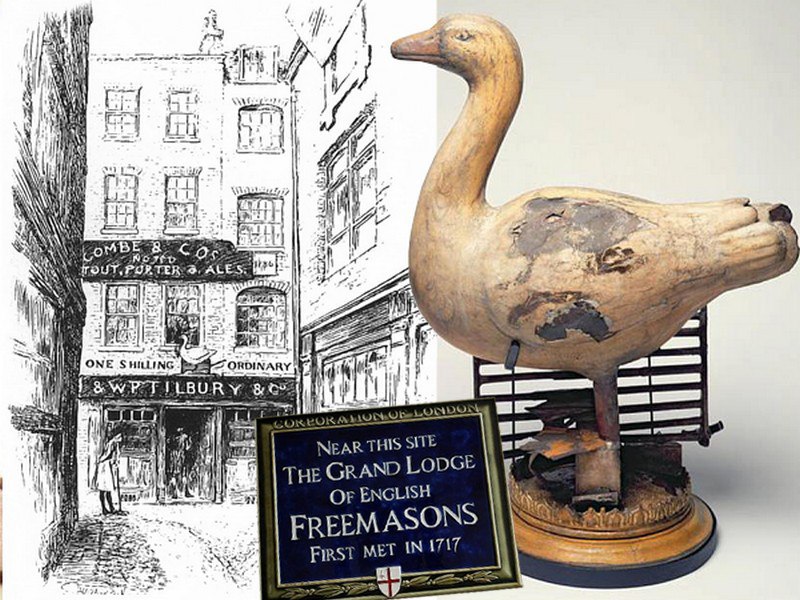
June 24, 1717 – The Founding of the Grand Lodge of England. On St. John’s Day, a meeting took place at the “Goose and Gridiron” tavern, located in the courtyard of St. Paul’s Cathedral, which marked the official beginning of Masonic history. Representatives of four lodges founded the “Grand Lodge of London and Westminster” pro tempore (in accordance with proper procedure), electing the first Grand Master and agreeing to meet every three months, with a general assembly held annually on St. John’s Day. The tavern did not survive (it was destroyed by fire), but by decision of the London City Council, construction on its former site is prohibited. A commemorative plaque on a nearby building marks this historic event.
Illustration: The only surviving drawing of the facade of the “Goose and Gridiron” tavern; on the right – a reconstruction of the tavern’s signboard; in the center – a photograph of the memorial plaque: “Near this site, the Grand Lodge of English Freemasons first met in 1717”
Freemasonry in Belarus in the Late 18th – Early 19th Century
The first Masonic lodges appeared in the Belarusian lands in the second half of the 18th century when these territories were part of the Polish-Lithuanian Commonwealth. In the 1770s and 1780s, lodges operated in Vilnius and Hrodna, connected to Polish and Lithuanian Masonic structures. Representatives of the local nobility and intelligentsia played a significant role in the development of Freemasonry in the Belarusian lands, adopting European Enlightenment ideas.
After Belarus was incorporated into the Russian Empire following the partitions of the Polish-Lithuanian Commonwealth, the Masonic movement underwent changes. In the late 18th – early 19th century, lodges operated here that were linked to Russian and Polish Masonic organizations. However, in 1822, Freemasonry was officially banned in the Russian Empire, leading to the decline of lodge activities in the Belarusian lands.
Belarusian Freemasonry at the Beginning of the 20th Century
At the beginning of the 20th century, Freemasonry in Belarus began to revive again, although not on the same scale as in Western Europe. After the revolutionary events of 1905 and a certain relaxation of censorship in the Russian Empire, there was a partial resurgence of secret organizations, including Masonic lodges.
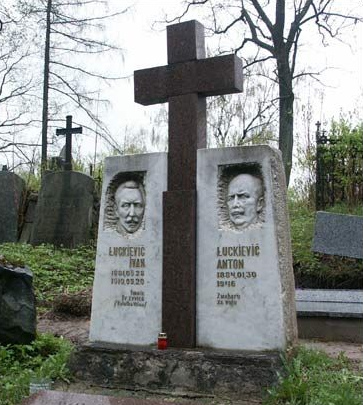
Belarusian Freemasonry reached a new level thanks to the activities of brothers Anton and Ivan Lutskevich, who became key figures in the Belarusian national movement. In 1910, the lodge “Adzinstva” (“Unity”) was established in Vilnius, bringing together leading Belarusian intellectuals and national revival activists, including the Lutskevich brothers.
Anton and Ivan Lutskevich not only participated in Masonic lodges but also contributed to the development of Belarusian culture and identity through their political and cultural projects. They played an active role in the creation and publication of the newspaper Nasha Niva, which became the main platform for the Belarusian national movement.
Among other prominent Belarusians who were Freemasons, notable figures include Tadeusz Kościuszko, a national hero of the USA and Poland and an honorary citizen of France; composer and political figure Michał Kleofas Ogiński; some representatives of the Radziwiłł and Sapieha families; one of the authors of Belarusian grammar, Branislaw Tarashkevich; and many others.
During the short period of independence of the Belarusian People’s Republic (1918), some public figures who embraced Masonic ideas sought to build the state on the principles of liberty, equality, and fraternity. However, after the establishment of Soviet rule, Masonic activities in Belarus were completely suppressed. The Soviet authorities viewed Freemasonry as a bourgeois ideology incompatible with Marxism, and any activities in this direction were strictly persecuted.
Belarusian Freemasonry Today
After the collapse of the Soviet Union, Masonic structures began to revive across the post-Soviet space. In Belarus, interest in Freemasonry grew in the late 1990s and early 2000s. During this period, attempts were made to establish new lodges. The culmination of this process was the founding of the Grand Lodge of Belarus in the Orient of Minsk on May 25, 2019.
Modern Belarusian Freemasons continue the traditions of their distinguished predecessors in promoting enlightenment, supporting charity, and striving for self-improvement.
Freemasonry in Belarus is focused on the spiritual and moral self-development of its members, as well as supporting charitable initiatives. Many Belarusian Freemasons maintain connections with foreign lodges and participate in international Masonic organizations.
Belarusian Freemasonry continues to exist as part of the global Masonic tradition, upholding the principles of humanism, tolerance, and spiritual development.
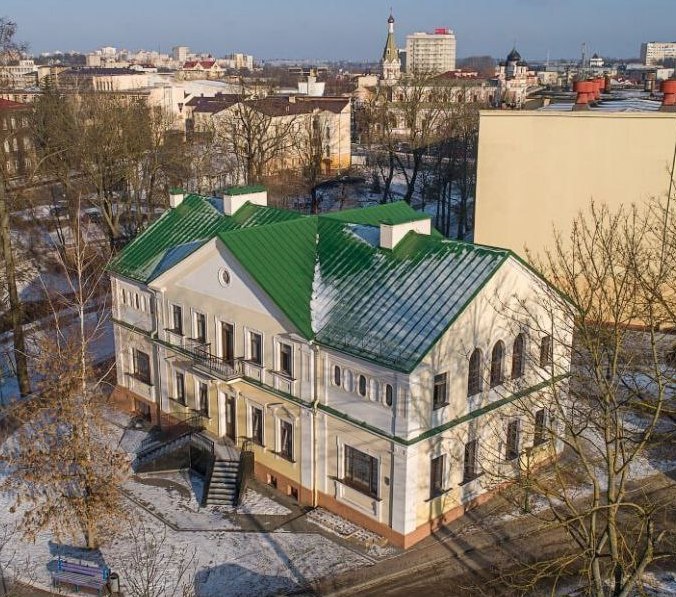
Masonic House, Grodno, Belarus
The Masonic House in Grodno is closely associated with Freemasonry. Since the late 18th century, this building hosted meetings of the local Masonic lodge “Happy Liberation,” attended by notable figures such as Jean Gilibert, Franciszek Narwojsz, Giuseppe Sacca, and others.
In the early 19th century, the house became the property of various charitable organizations. However, meetings of the “Freemasons” continued there, with the participation of the Grodno governor and Freemason Michał Butawt-Andrzejkowicz, Kazimierz Kreybich, the magnates of the Lachnicki family, and others.
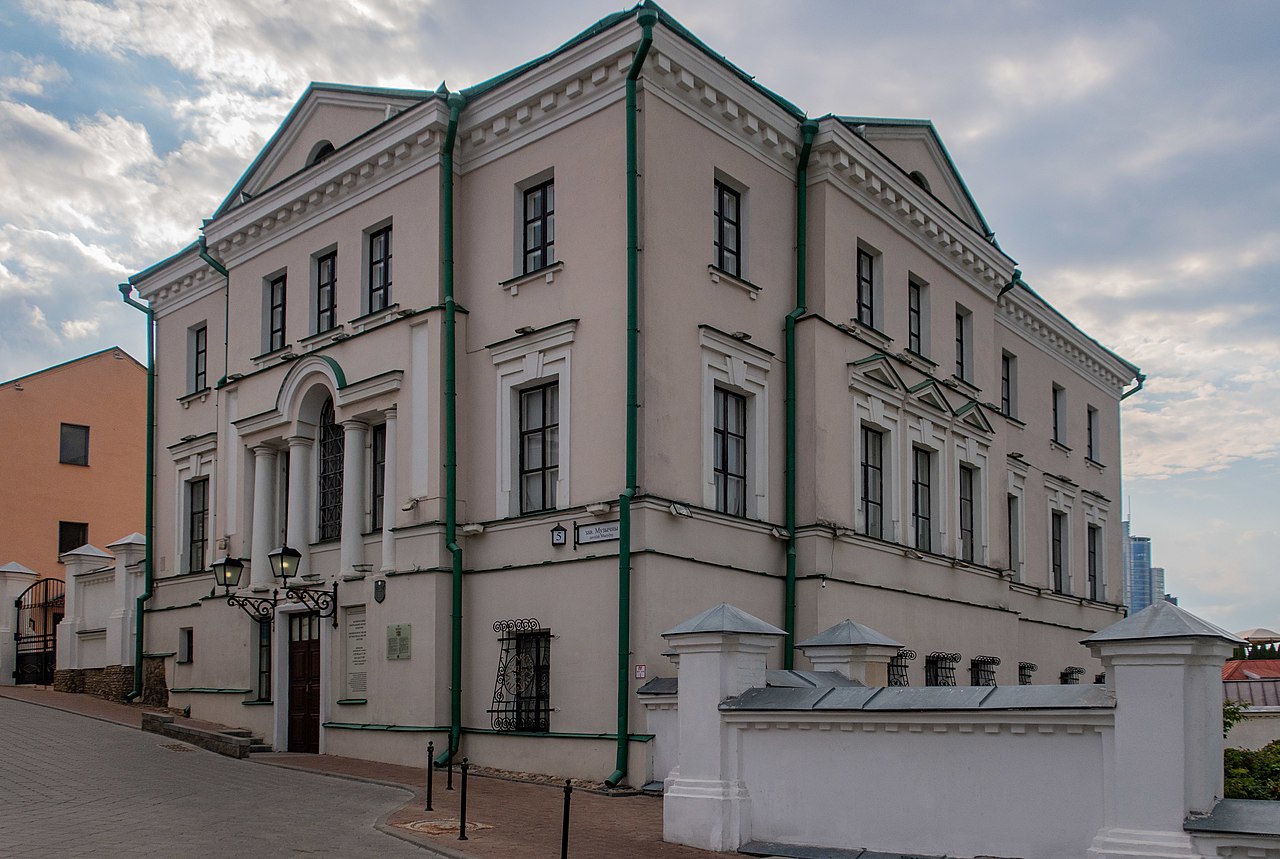
The Masonic House, Minsk, Belarus
There is a legend that this building originally belonged to the Minsk Masonic lodge Northern Torch. It is known that the son-in-law of the building’s owner, Trajan Klyuchynski, was a member of this lodge.
Some authors have claimed that in certain city plans from the first half of the 19th century, Klyuchynski’s stone house resembles a cross. Additionally, it was suggested that the building was initially constructed without windows, with glass imitations placed in their stead.
Therefore, although there is no definitive proof, it is possible that the activities of the Northern Torch lodge in Minsk were partially connected to the Masonic House on Muzychny Lane in the Upper Town.